Justin Sun is absorbing mounting losses after remaining blacklisted from World Liberty Financial for more than three months.
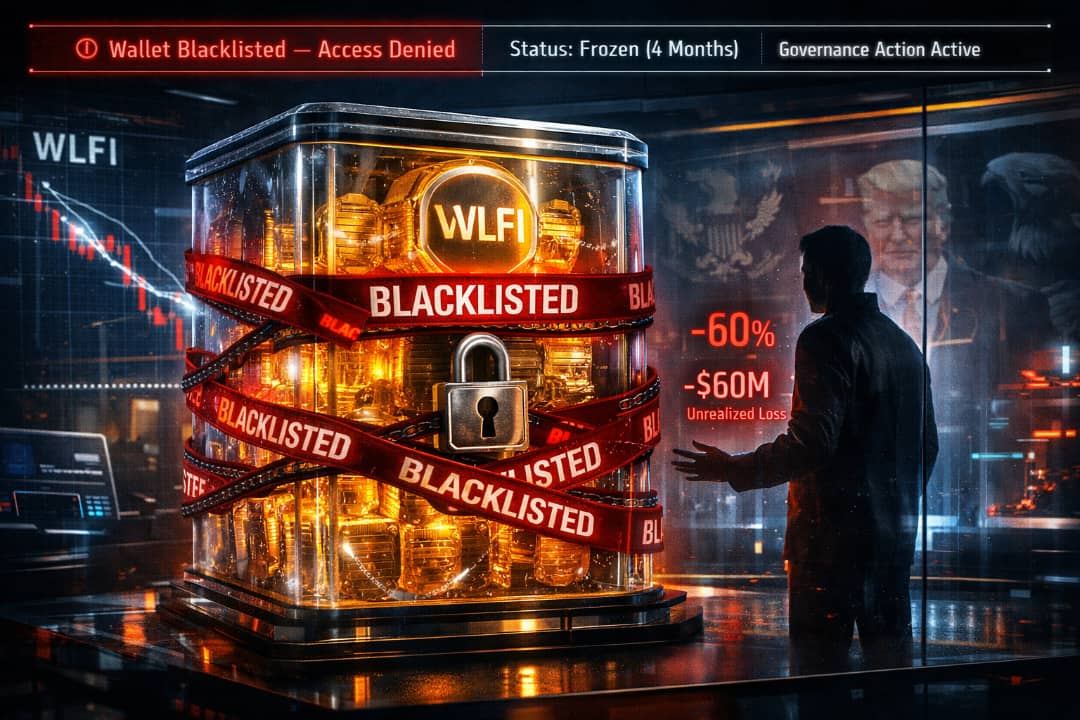
The restriction, first imposed in September, continues to block access to his WLFI holdings and has erased an estimated $60 million in value.
The scale of the loss is now coming into sharper focus. On Monday, blockchain analytics platform Bubblemaps disclosed that the value of Sun’s frozen tokens has dropped sharply during the extended lockout period.
In a post on X, the firm confirmed that Sun remains blacklisted by World Liberty Financial and that the decline unfolded steadily over the past three months, as the broader market weakened.
Justin Sun is still blacklisted by WLFI
in 3 months, his locked tokens dropped $60m in value
absolutely brutal https://t.co/3Af2px04h5 pic.twitter.com/4qxuiE4qwJ
— Bubblemaps (@bubblemaps) December 22, 2025
The update has revived scrutiny around a dispute that has largely remained out of public view since early autumn.
Contents
The September Transfer That Triggered The Freeze
The standoff traces back to September, when World Liberty Financial blacklisted an address linked to Sun shortly after it transferred roughly $9 million worth of WLFI tokens.
The response was immediate. The address was frozen. Transfers were halted. And access to the tokens was cut off entirely.
At the time, WLFI did not publicly detail the specific compliance or governance concerns that led to the action. What was clear, however, was that the restriction was comprehensive. Once blacklisted, the address could no longer move assets, regardless of market conditions.
More than three months later, nothing has changed. Sun’s status remains the same. The blacklist remains active. And the tokens remain locked.
The prolonged nature of the restriction is unusual in an industry where disputes are often resolved quietly or quickly through governance votes or private negotiations.
Market Decline Amplifies The Damage
The blacklist alone did not cause the losses. The broader market did the rest.
Since WLFI began trading in September, the token has dropped more than 60%, according to data from CoinGecko. That decline has compounded the impact of the freeze.
Most holders were able to react. Some sold. Others reduced exposure. Sun could do neither.
With his holdings immobilized, Sun was forced to ride the downturn in full. The result is the $60 million paper loss highlighted by Bubblemaps, driven not by liquidation but by enforced inactivity.
The situation underscores a key risk of token blacklists. In volatile markets, the inability to act can be as damaging as poor timing.
A High-stakes Bet On Trump-linked Crypto Ventures
The freeze is particularly notable given Sun’s financial exposure to Trump-affiliated crypto projects.
Sun invested approximately $75 million in WLFI. He also committed about $100 million to the TRUMP memecoin. In total, he directed an estimated $175 million toward ventures associated with Donald Trump.
Those investments positioned Sun as one of the most significant backers of Trump-linked crypto initiatives. They also made him one of the most exposed.
The blacklisting has therefore taken on broader significance. It is not just about one wallet. It is about governance power, investor protections, and how politically connected crypto projects manage internal disputes.
The issue gained wider attention this week following renewed coverage from industry media, including reporting that reiterated Sun’s continued exclusion and the financial toll it has taken.
Sun Denies Wrongdoing And Challenges The Decision
From the outset, Sun has pushed back against the blacklist.
Following the September action, he denied any wrongdoing and said his transactions aligned with his stated intention to support the project long term. He described the freeze as unreasonable and argued that it contradicted the goals of strengthening the WLFI ecosystem.
Sun has not publicly indicated whether legal action is being considered. Nor has World Liberty Financial announced a timeline for reviewing or lifting the restriction.
The lack of resolution has allowed the dispute to linger, with neither side offering further clarity. For now, the tokens remain frozen. And the losses continue to exist on paper.
Governance Questions Return To The Spotlight
The case is now reigniting debate around governance and control in crypto ecosystems.
Blacklisting mechanisms are designed to protect projects from malicious activity. But when applied to major investors without transparent resolution processes, they raise difficult questions.
- Who decides when a freeze ends?
- What standards apply?
And how are investors protected when governance decisions collide with market volatility?
Sun’s situation brings those questions into focus. As the founder of TRON and a high-profile figure in crypto, his inability to resolve the issue quietly suggests deeper structural challenges.
For now, the dispute remains unresolved. The blacklist remains active. And the losses remain unrealized but substantial.
As crypto markets continue to mature, cases like this may shape how future projects balance enforcement, transparency, and investor trust.
Disclosure: This is not trading or investment advice. Always do your research before buying any cryptocurrency or investing in any services.
Follow us on Twitter @nulltxnews to stay updated with the latest Crypto, NFT, AI, Cybersecurity, Distributed Computing, and Metaverse news!