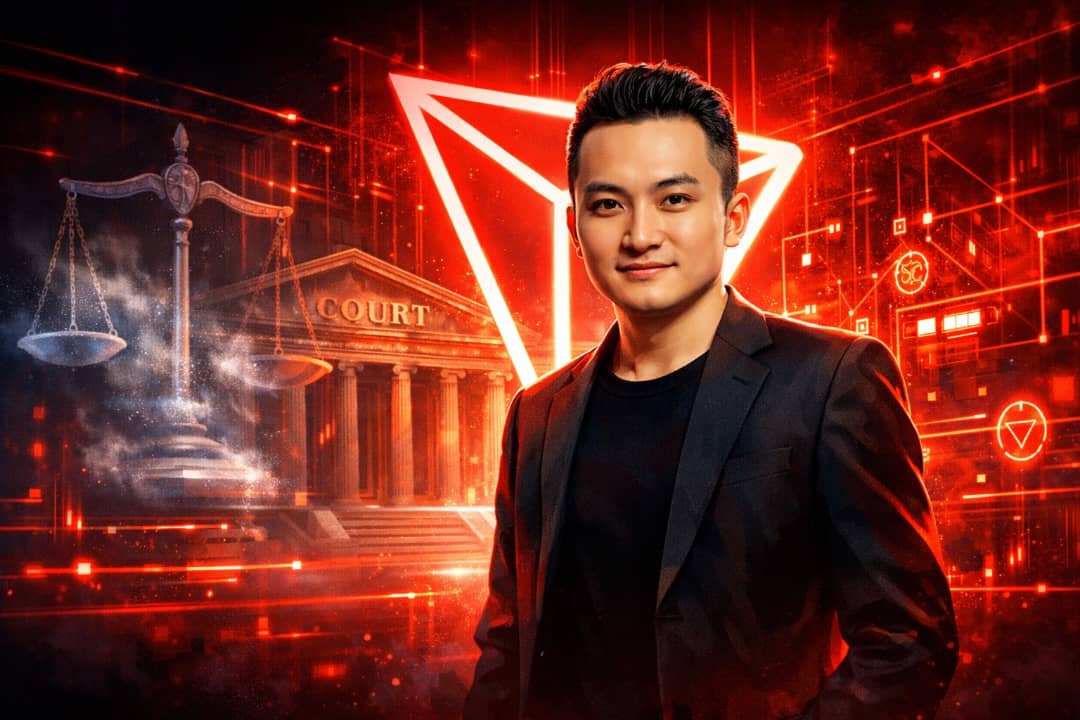
A legal dispute that has followed the Tron ecosystem for nearly three years has finally come to an end. The U.S. Securities and Exchange Commission (SEC) and Tron founder Justin Sun have reached a settlement, bringing closure to a lawsuit that began in March 2023.
Under the agreement, Rainberry Inc., a company controlled by Sun and closely linked to the BitTorrent protocol, will pay a $10 million civil penalty. In return, the SEC has agreed to dismiss all remaining claims against Sun personally, as well as claims involving the Tron DAO and the BitTorrent Foundation.
The resolution removes a regulatory cloud that had lingered over several projects tied to Sun. It also arrives at a moment when the U.S. government appears to be reassessing its broader approach to cryptocurrency oversight.
Contents
The SEC’s Case Against Justin Sun
The SEC first filed its lawsuit against Justin Sun in March 2023, accusing the crypto entrepreneur of manipulating trading activity tied to tokens connected with the Tron ecosystem.
According to regulators, Sun directed employees to carry out hundreds of thousands of wash trades between accounts he controlled. These trades, the SEC claimed, created the appearance of legitimate market demand while artificially boosting trading volumes.
Wash trading involves buying and selling the same asset repeatedly in order to give the impression of active trading. Regulators alleged that the strategy helped generate roughly $31 million in profits.
The case quickly gained attention across the crypto industry because of Sun’s high profile and the scale of the allegations. Beyond targeting Sun personally, the lawsuit also included organizations tied to his blockchain ventures, including the Tron DAO and the BitTorrent Foundation.
At the time, the SEC argued that these actions misled investors and distorted the market around the tokens involved.
Settlement Terms End The Three-Year Legal Fight
The new settlement brings the legal battle to a close without a trial.
Rainberry Inc., the company behind the BitTorrent protocol and controlled by Sun, will pay a $10 million civil penalty as part of the agreement. In exchange, the SEC has agreed to drop the remaining claims connected to the case.
Importantly, the settlement also clears Justin Sun personally of ongoing legal exposure. Claims against him, the Tron DAO, and the BitTorrent Foundation have been dismissed with prejudice, a legal term meaning the case cannot be filed again in the future.
That effectively ends one of the most closely watched enforcement actions involving a major crypto founder.
The Tron DAO acknowledged the resolution publicly, confirming that the dispute with regulators had reached its conclusion.
We are pleased to announce that the SEC has moved to dismiss all claims against Tron Foundation.
Today’s SEC is making meaningful progress toward a pro-innovation environment in the United States.
TRON DAO will continue building and strengthening the TRON network to expand…
— TRON DAO (@trondao) March 5, 2026
With the agreement finalized, projects connected to the Tron ecosystem can now operate without the uncertainty that came with an unresolved SEC case.
Justin Sun Responds To The Resolution
Justin Sun also addressed the settlement publicly, describing it as a moment of closure after several years of legal tension.
In a post shared on X, Sun emphasized that development across his projects continued throughout the dispute and that his focus remains on innovation.
“Today’s resolution brings closure, but I never stopped building. I will continue to focus on accelerating innovation in the United States and around the world.”
His comments reflect a message he has repeated during the case, that the growth of the Tron ecosystem never slowed despite the regulatory pressure.
I am very pleased to confirm that the SEC has moved to dismiss all claims against me, Tron Foundation, and BitTorrent Foundation.
Today’s resolution brings closure, but I never stopped building. I will continue to focus on accelerating innovation in the United States and around…
— H.E. Justin Sun 👨🚀 🌞 (@justinsuntron) March 5, 2026
For Sun, the settlement allows him to move forward without the legal distractions that had surrounded his ventures since 2023.
Why The Case Drew So Much Attention
The lawsuit attracted widespread interest because of the role that both Tron and BitTorrent play in the digital asset industry.
Tron has grown into one of the largest blockchain networks globally, particularly known for handling a significant share of stablecoin activity. The network is widely used for decentralized finance applications and for transferring USDT across borders.
BitTorrent, on the other hand, is one of the oldest and most widely recognized peer-to-peer file-sharing protocols on the internet. After acquiring the platform in 2018, Sun began integrating it into the blockchain ecosystem, eventually launching the BitTorrent token.
Because these platforms operate at such scale, the SEC’s accusations raised concerns across the industry about how regulators might handle alleged market manipulation within major blockchain ecosystems.
For many observers, the case became a test of how far U.S. authorities were willing to push enforcement actions against high-profile figures in crypto.
A Sign Of Changing Crypto Regulation In The U.S.
Beyond the immediate legal outcome, the settlement also hints at a broader shift in the regulatory environment surrounding cryptocurrencies in the United States.
Over the past few years, the SEC relied heavily on enforcement actions to police the digital asset market. Critics often described this strategy as “regulation by enforcement,” arguing that companies were being forced to learn the rules only after facing lawsuits.
The settlement with Justin Sun may signal a different direction.
With the Trump administration pushing to position the United States as a global hub for crypto innovation, regulators appear increasingly focused on clearing older disputes rather than extending lengthy courtroom battles.
Some analysts see the resolution as part of a larger effort by the SEC to close out pending cases and reset its relationship with the digital asset sector.
If that trend continues, the industry could see a regulatory framework that places greater emphasis on clear rules rather than enforcement alone.
What The Settlement Means For The Crypto Industry
For the Tron ecosystem, the immediate impact is straightforward: the legal uncertainty tied to the SEC case is now gone.
Developers, investors, and businesses connected to the network can operate without the risk of an unresolved regulatory fight hanging over the project.
More broadly, the settlement highlights how disputes between crypto founders and regulators can eventually be resolved through negotiation rather than prolonged litigation.
The case also serves as a reminder that even in a fast-moving industry built on decentralization, regulatory oversight remains a powerful force.
As governments around the world work to define their approach to digital assets, similar cases are likely to continue shaping the rules that guide the crypto economy.
For Justin Sun, however, this particular chapter has now closed, bringing an end to a legal battle that began in 2023 and allowing him to focus once again on expanding the projects tied to the Tron network.
Disclosure: This is not trading or investment advice. Always do your research before buying any cryptocurrency or investing in any services.
Follow us on Twitter @nulltxnews to stay updated with the latest Crypto, NFT, AI, Cybersecurity, Distributed Computing, and Metaverse news!