
For a long time, many people believed Zcash would become the leading force in crypto privacy. The idea was simple: as the industry matured and concerns about surveillance grew, privacy-focused networks would naturally become more important.
At different moments, Zcash seemed ready to take that position. Supporters argued that its technology could eventually make it the “encrypted version of Bitcoin.”
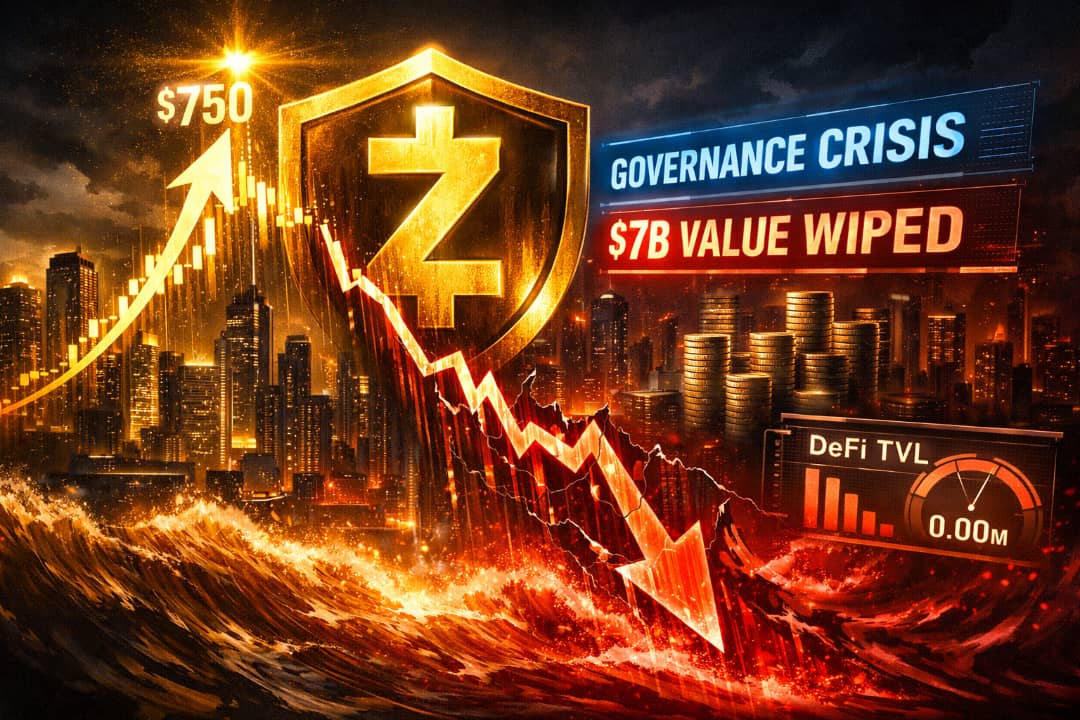
Fast forward to today and the situation looks very different. ZEC trades well below previous highs, currently under $200, after a sharp reversal that wiped out more than $7 billion in market value. The immediate trigger came after leadership at the core development company stepped down following a governance dispute.
But when you look back at the timeline, the warning signs didn’t start in 2026. Some of them were already visible much earlier, even when the price was still surging.
Remember when $ZEC was supposed to lead Privacy and be the next big thing?
> Currently under $200
> Trigger started by core team resignation
> Lost over $7 billion in valuationBut even before the big drop, there were signs 👀
Did we ignore them or the team made it smooth?
— Our Crypto Talk (@ourcryptotalk) March 8, 2026
Contents
When The Privacy Narrative Came Back
The turning point started in late summer 2025.
At the time, Zcash was trading below $50 and wasn’t getting much attention. Then momentum suddenly picked up. Within weeks, the price began moving rapidly higher.
By October, ZEC had pushed past $400. In November, the rally intensified and the token briefly approached $750. That meant the asset had climbed more than 700% in just a few months.
For a short period, Zcash became one of the best-performing major cryptocurrencies in the entire market. It even surpassed Monero, which had long dominated the privacy coin category, in market capitalization.
At the peak of that rally, the project’s total valuation climbed close to $10 billion.
Unlike many altcoin pumps that run purely on speculation, this move had real catalysts behind it. The broader market narrative was shifting again, and privacy was becoming a major talking point across the crypto space.
Institutional Interest Started Building
Around the same time, interest in privacy-focused technology was rising again.
Reports such as the State of Crypto research published by Andreessen Horowitz showed growing search activity related to privacy tools. That data suggested that attention around encrypted transactions and anonymous payments was returning.
Some well-known voices in the crypto industry also began discussing the concept publicly.
Figures like Arthur Hayes and Naval Ravikant spoke about the idea of an “encrypted Bitcoin.” For many investors, Zcash looked like one of the projects closest to delivering that vision.
Then institutional money began flowing in.
Several major purchases helped strengthen the bullish narrative:
- Cypherpunk Holdings purchased about $18 million worth of ZEC
- Winklevoss Capital accumulated more than $58 million
- Grayscale Investments reopened its Zcash Trust
Those moves mattered. Institutional buying tends to send a signal that bigger players are taking a project seriously. It also creates the impression that strong support exists below the market.
At the time, many traders believed this capital would help sustain the rally.
The Halving Added More Fuel
Another major event arrived in November 2025.
Zcash went through its scheduled halving, which cut block rewards from 3.125 ZEC to 1.5625 ZEC. Like Bitcoin halvings, this reduces the amount of new supply entering the market.
Supply shocks often play a big role in crypto rallies, especially when demand is already increasing.
Zcash also introduced the ZIP-1015 lockbox mechanism, which redirected 12% of mining rewards toward ecosystem funding and development. Supporters saw this as a way to strengthen long-term sustainability.
At the same time, the asset gained more trading exposure through derivatives markets. Listings on platforms like Hyperliquid allowed traders to open leveraged positions through perpetual futures contracts.
All of these elements combined into a powerful setup: rising demand, reduced supply, institutional buying, and leveraged trading.
The result was a rapid eightfold price increase in a relatively short period.
Quiet Signs Appeared Before The Drop
Even while the rally was still happening, some indicators started pointing to trouble. One of the most noticeable changes happened inside the ecosystem itself.
During the peak of the price surge, the Zcash DeFi ecosystem held more than $30 million in total value locked (TVL). That figure suggested that capital was actively being used across applications built around the network. But within weeks, TVL collapsed to under $2 million.
The capital didn’t leave suddenly with a crash. Instead, it slowly disappeared while the price remained elevated.
This kind of disconnect often matters in crypto markets. When the value locked inside an ecosystem drops sharply while prices stay high, it can signal that the rally is losing its underlying support.
At the time, however, the price action was strong enough that many people ignored the shift.
Governance Conflict Shakes Confidence
The real shock arrived in January 2026.
A governance dispute broke out between the Electric Coin Company (ECC), the primary development organization behind Zcash, and the board of the Zcash Bootstrap nonprofit.
The disagreement escalated quickly and eventually led to a dramatic outcome. The entire leadership team at Electric Coin Company resigned. Markets reacted almost immediately. ZEC’s price dropped between 14% and 25% within a short time, triggering broader concern among investors.
But one important detail didn’t receive as much attention during the selloff.
The developers themselves did not abandon the project. Instead, they left ECC and created a new independent company that would continue working on privacy technology related to the ecosystem.
Development around tools like the Zashi Wallet also continued.
In other words, the protocol itself didn’t shut down. The network kept operating.
Still, leadership turmoil at such a critical moment was enough to break market momentum.
How The Market Cycle Played Out
Looking back, the sequence of events tells a clear story.
The rally began with a strong narrative shift around privacy. Institutional buyers stepped in, and the halving tightened supply. New trading venues added leverage, pushing prices higher even faster.
ZEC ended up climbing nearly eight times in about two months.
But once momentum started fading, the opposite forces began taking over.
Ecosystem activity declined. Capital quietly left DeFi applications built around the network. Governance tensions eventually surfaced, creating uncertainty about the project’s direction.
In a relatively short time, Zcash’s valuation dropped from close to $10 billion to around $3 billion.
That means over $7 billion in value disappeared.
The technology behind Zcash still exists, and development has not stopped completely. But the story shows how quickly momentum can shift in crypto markets.
Narratives can drive prices higher very quickly. Yet when ecosystem activity weakens and governance conflicts emerge, even the strongest rallies can reverse just as fast.
Disclosure: This is not trading or investment advice. Always do your research before buying any cryptocurrency or investing in any services.
Follow us on Twitter @nulltxnews to stay updated with the latest Crypto, NFT, AI, Cybersecurity, Distributed Computing, and Metaverse news!