
Digital assets are gradually moving beyond their early experimental phase. For much of the past decade, cryptocurrencies and blockchain networks operated largely outside the traditional financial system.
Today, that dynamic is beginning to shift as major financial companies explore how the technology might quietly improve the way money moves around the world.
In practical terms, that means using blockchain tools for everyday financial activities rather than treating them as isolated digital ecosystems. International remittances, corporate payments, and settlement systems are increasingly part of that conversation.
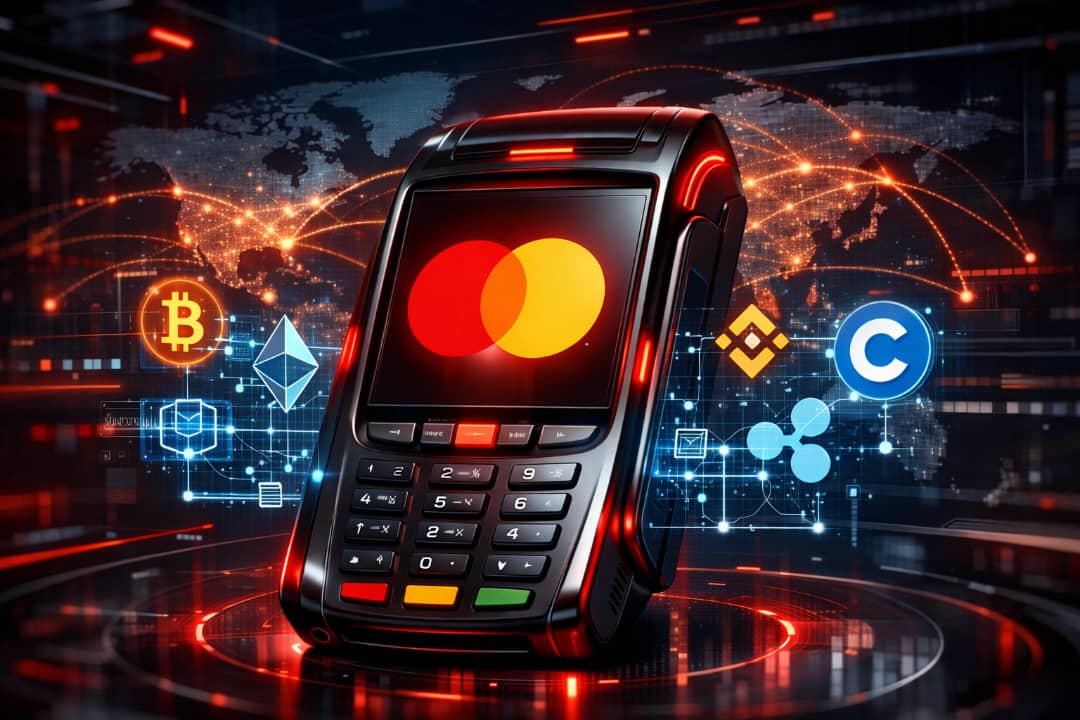
Against this backdrop, Mastercard has announced a new initiative aimed at bringing together the companies building those technologies. The payments giant recently introduced the Mastercard Crypto Partner Program, a global network designed to connect dozens of firms across the digital asset industry with Mastercard’s payment infrastructure.
More than 85 organizations have joined the program so far, spanning crypto-native companies, financial institutions, and payments providers. The goal is to create a collaborative forum where participants can discuss real-world applications for blockchain technology and explore ways to integrate those tools into the existing financial system.
Digital assets are entering a new phase. What once ran in parallel to existing financial systems is increasingly being applied to solve practical, real-world needs — often behind the scenes – from cross-border remittances to B2B money transfers. This creates new opportunities to… pic.twitter.com/DZ1gjmW8og
— Mastercard (@Mastercard) March 11, 2026
The program signals a growing effort by traditional payment networks to work more closely with companies developing blockchain-based financial infrastructure.
Contents
- 1 A Collaborative Network For Crypto And Payments Companies
- 2 Linking Blockchain Technology To Mastercard’s Global Network
- 3 Real-World Financial Applications Take Priority
- 4 Infrastructure Providers And Blockchain Organizations Join
- 5 Payment Giants Increasingly Explore Digital Asset Technology
- 6 A Gradual Convergence Of Crypto And Traditional Finance
A Collaborative Network For Crypto And Payments Companies
Rather than launching a new payment product, Mastercard’s initiative focuses on collaboration. The company describes the Crypto Partner Program as a space where organizations from across the digital asset ecosystem can share expertise and develop new solutions together.
Participants include a wide range of companies operating in different areas of the crypto economy. Some provide blockchain infrastructure, others focus on digital asset custody or payment services, and several operate major cryptocurrency exchanges.
Among the participants are well-known platforms such as Binance, Circle, Ripple, Gemini, PayPal, and Paxos.
Bringing companies with different specializations into a single network could help address one of the biggest challenges facing digital asset adoption—how blockchain-based systems interact with traditional financial infrastructure.
For Mastercard, the program also provides an opportunity to stay closely connected to innovations emerging from the crypto sector.
Linking Blockchain Technology To Mastercard’s Global Network
One of the main objectives of the initiative is to connect blockchain-based tools directly with Mastercard’s existing payment network.
That network already operates in more than 200 countries and territories, forming one of the largest payment infrastructures in the world. By linking blockchain technology to this system, the company is effectively exploring how digital assets might function within the established global payments landscape.
Importantly, the initiative does not suggest replacing existing payment rails. Instead, Mastercard appears to be focusing on integration—allowing blockchain systems to operate alongside traditional financial channels.
For financial institutions experimenting with digital assets, this approach could provide a bridge between emerging blockchain platforms and the infrastructure they already use for processing payments.
In practice, that might involve enabling certain blockchain-based settlements or digital asset transfers to interact with Mastercard’s network, potentially improving the efficiency of international payments.
Real-World Financial Applications Take Priority
While cryptocurrencies often attract attention for trading activity, Mastercard’s program emphasizes more practical uses of the underlying technology.
The initiative focuses on areas where blockchain infrastructure could make financial transactions faster or more efficient. Among the key areas being explored are:
• Cross-border remittances
• Business-to-business payments
• Settlement infrastructure
• Transfers involving tokenized real-world assets
Cross-border remittances remain one of the most discussed applications for blockchain technology. Traditional international transfers can involve several intermediaries, often increasing both the time and cost required to complete a payment. Blockchain networks have the potential to streamline these processes by enabling faster and more transparent settlements.
Business-to-business payments represent another area of interest. Companies regularly move funds across borders when paying suppliers or partners, and improving settlement efficiency could simplify those transactions.
Tokenization is also gaining traction within the financial industry. By representing real-world assets on blockchain networks, tokenization could allow assets such as securities or commodities to move more easily through digital payment systems.
Infrastructure Providers And Blockchain Organizations Join
The range of companies participating in the program reflects how diverse the digital asset ecosystem has become.
Beyond exchanges and payment platforms, several organizations involved in blockchain development and digital asset infrastructure are also part of the initiative.
Participants include the Stellar Development Foundation, along with infrastructure providers such as MoonPay, Anchorage Digital, and BitGo.
These organizations contribute different capabilities to the ecosystem. Some focus on building blockchain networks, others specialize in secure custody of digital assets, while several provide services that allow financial institutions to connect with blockchain platforms.
The diversity of participants may help the program explore how different parts of the digital asset ecosystem can interact with global payment networks.
Payment Giants Increasingly Explore Digital Asset Technology
Mastercard’s move comes as traditional payment companies devote more attention to blockchain-based financial tools.
Over the past few years, major financial networks have been exploring stablecoins, tokenized assets, and blockchain settlement systems as possible ways to modernize payment infrastructure.
Mastercard’s main competitor, Visa, has also experimented with blockchain initiatives, particularly around stablecoin payments and settlement technology.
As both companies explore these areas, blockchain is gradually becoming part of the broader discussion about the future of global payments.
A Gradual Convergence Of Crypto And Traditional Finance
For much of cryptocurrency’s early history, blockchain platforms and traditional financial institutions operated in largely separate ecosystems.
Crypto companies built decentralized networks designed to function independently of banks, while traditional payment providers continued relying on existing financial infrastructure.
That separation is slowly narrowing.
Programs like Mastercard’s Crypto Partner Program suggest that collaboration between the two sectors is becoming more common. Rather than treating blockchain as a competing system, many financial institutions are beginning to see it as a technology that could complement the infrastructure they already operate.
If that trend continues, blockchain may end up playing a subtle but important role in the global financial system—powering parts of payment infrastructure behind the scenes while remaining largely invisible to everyday users.
For now, Mastercard’s initiative represents another step toward that possible future, where digital asset technologies and traditional financial networks operate side by side.
Disclosure: This is not trading or investment advice. Always do your research before buying any cryptocurrency or investing in any services.
Follow us on Twitter @nulltxnews to stay updated with the latest Crypto, NFT, AI, Cybersecurity, Distributed Computing, and Metaverse news!