
The Garrett Jin whale entity is back in the spotlight, and this time it is not blowing up a Hyperliquid position or dumping billions worth of ETH on Binance.
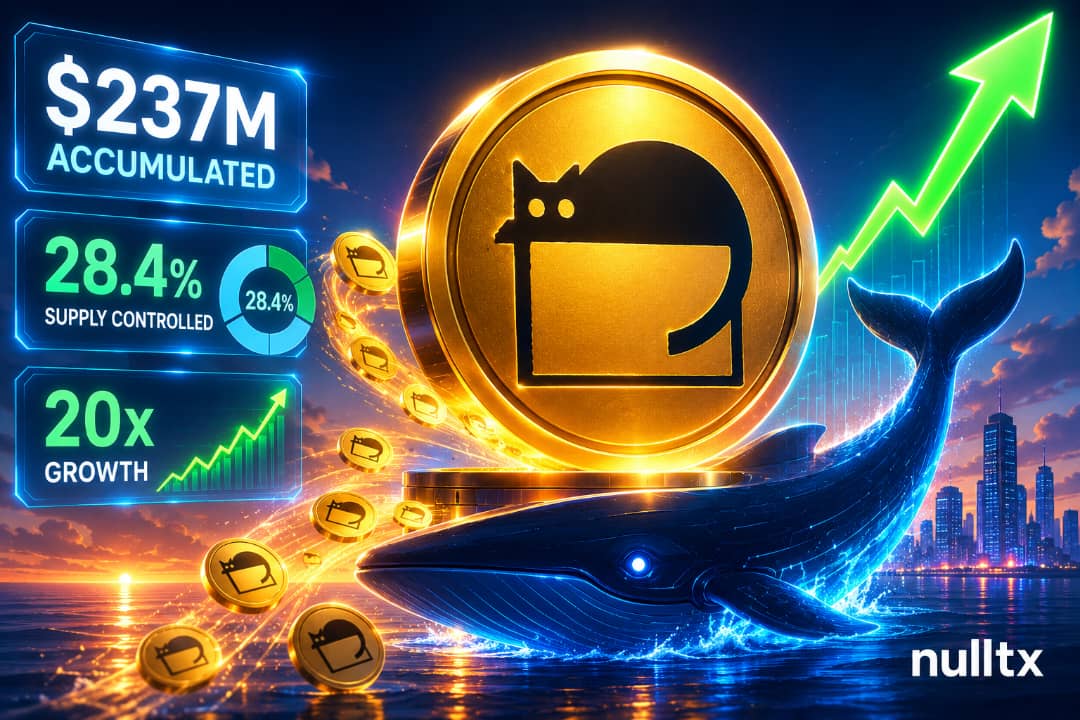
It has been quietly accumulating Binance Life tokens for months, and on-chain data now suggests it controls nearly 30% of the entire token supply after riding a 20x price run from the ground floor.
Contents
A $237M Accumulation Hiding in Plain Sight
On-chain analyst EmberCN flagged the pattern, and the numbers are striking. From February through just a few days ago, a cluster of addresses accumulated 284 million Binance Life tokens worth approximately $237 million at current prices.
一个发现:2 个月上涨了 20 倍的币安人生可能是由 Garrett Jin (@GarrettBullish) 这个去年把几万枚 BTC 换成超过 90 万枚 ETH、今年 2 月份在 Hyperliquid 上多单爆仓损失 $2.3 亿的巨鲸实体在控盘?
1⃣从 2 月份到最近几天,一个地址集通过 Binance 提取以及链上买入,囤积了 2.84 亿枚的币安人生… pic.twitter.com/lbuZdQtX3O
— 余烬 (@EmberCN) June 7, 2026
Those tokens were gathered through direct withdrawals from Binance and on-chain purchases, and the accumulation spans months of quiet, patient buying that flew largely under the radar while the token ran.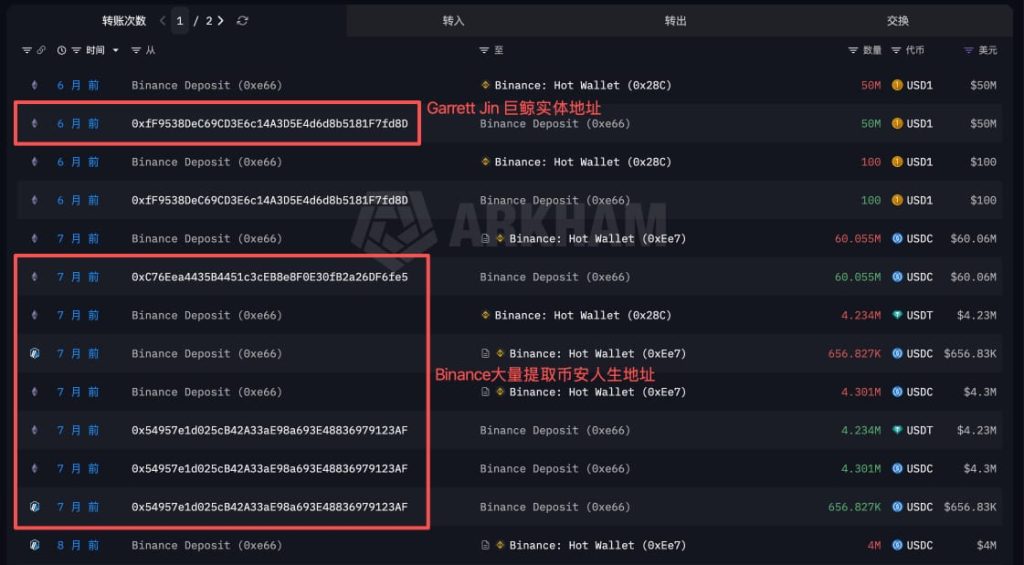
That 284 million tokens represents 28.4% of Binance Life’s total supply. Factor in what is likely held on centralised exchanges and the effective control this entity holds over the token’s circulating supply is almost certainly higher.
 All of this happened while Binance Life climbed from $0.04 to $0.85, a 20x move that dramatically amplified the paper value of every token accumulated during the earlier phases of the buy-in.
Arkham Connects the Dots to Garrett Jin
The link between these addresses and the Garrett Jin entity does not rest on speculation. Arkham’s intelligence platform connects the accumulating addresses to the Garrett Jin whale entity through shared deposit infrastructure on both Binance and Bybit.
Specifically, multiple addresses that withdrew large amounts of Binance Life from Binance previously shared a Binance deposit address with the Garrett Jin entity approximately six months ago.
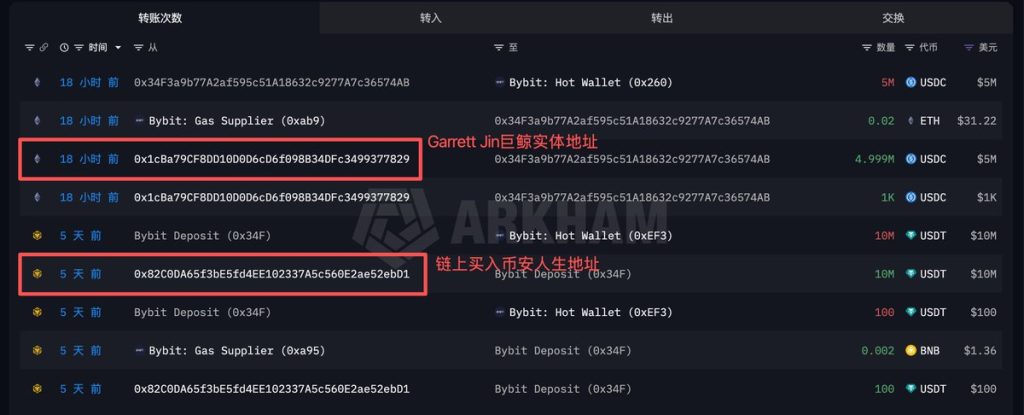
More recently, addresses that purchased significant amounts of Binance Life on-chain in the past few days shared a Bybit deposit address with the same entity within the last five days. Shared deposit addresses are one of the most reliable on-chain fingerprints for linking wallet clusters to a common controlling party, and in this case, the trail points clearly in one direction.
Who Exactly is the Garrett Jin Whale Entity
For anyone unfamiliar with this name, the Garrett Jin entity became one of crypto’s most watched whale clusters last year for holding a reported 100,000 BTC under the management of Garrett Jin. The scale of the operation put it in a category occupied by very few players in the entire market.
The entity’s track record since then has been eventful, to put it mildly. Last year, it executed a massive rotation out of BTC and into ETH, swapping tens of thousands of Bitcoin for over 900,000 ETH via Hyperliquid at prices above $3,500. That trade looked bold at the time and turned painful as ETH struggled to hold those levels.
Then, in February this year, the entity opened long positions on more than 200,000 ETH on Hyperliquid and suffered a $230 million liquidation, one of the largest single blowup events the platform has recorded. In May, it transferred 577,000 ETH worth $1.35 billion into Binance when ETH was trading around $2,350, after which the asset continued to decline.
The Pattern Raises Serious Market Integrity Questions
When a single entity quietly accumulates 28.4% of a token’s total supply over several months while that token runs 20x, the questions that follow are unavoidable. Does the market know who is buying? Do retail participants understand the concentration risk embedded in the token they are trading? And what happens to the price when an entity of this size decides to exit?
The Binance Life situation sits at an uncomfortable intersection of opaque accumulation, a price run that rewards early buyers handsomely, and a controlling entity with a documented history of making massive, market-moving decisions. None of that is illegal by default. But it is exactly the kind of structural information that changes how a rational trader should think about a token’s risk profile.
What This Means for Binance Life Going Forward
The token has already done the 20x. The entity has already accumulated its position. The question now is what comes next, and the Garrett Jin entity’s recent history offers some uncomfortable precedents. This is a whale cluster that rotated 900,000 ETH at the wrong price, took a $230 million liquidation, and deposited over a billion dollars worth of ETH into Binance right before ETH continued falling.
Whether the Binance Life position plays out differently remains to be seen. But anyone holding or considering exposure to the token now knows something the market did not know a week ago, nearly 30% of its supply sits in the hands of one of crypto’s most active and unpredictable mega-whales. That is not a reason to panic, but it is absolutely a reason to pay attention to what those on-chain addresses do next.
Disclosure: This is not trading or investment advice. Always do your research before buying any cryptocurrency or investing in any services.
Follow us on Twitter @nulltxnews to stay updated with the latest Crypto, NFT, AI, Cybersecurity, Distributed Computing, and Metaverse news!